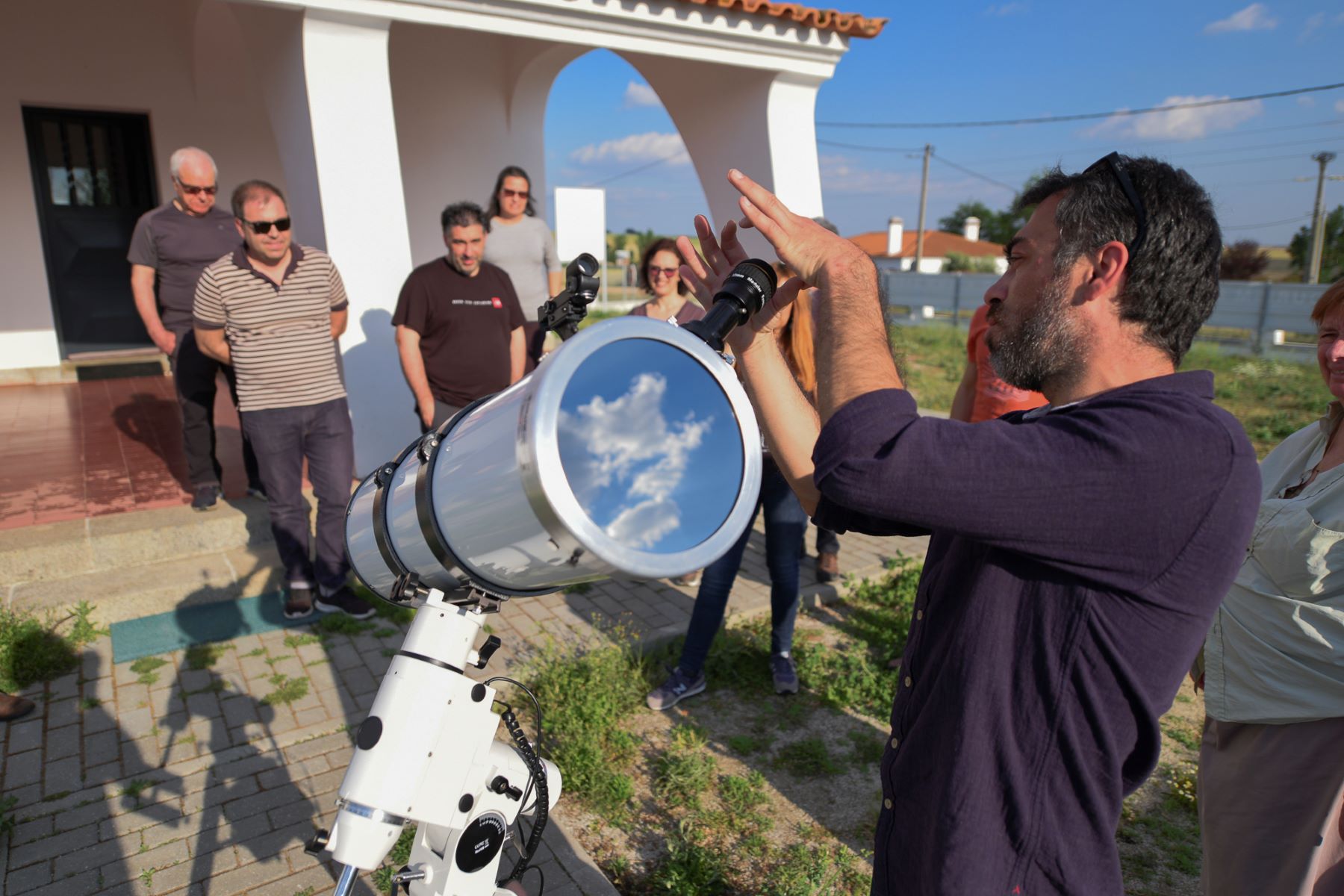
The purpose of these sessions is to explore, in a pedagogical and scientifically rigorous way, the past, present, and future of the star we orbit: the Sun.
The activity begins with a brief indoor presentation, where our star is placed within the broader context of stellar evolution, establishing the connection between the Sun and the other stars visible in the night sky. Topics addressed include internal structure, activity cycles, energy production through nuclear fusion, and future evolution.
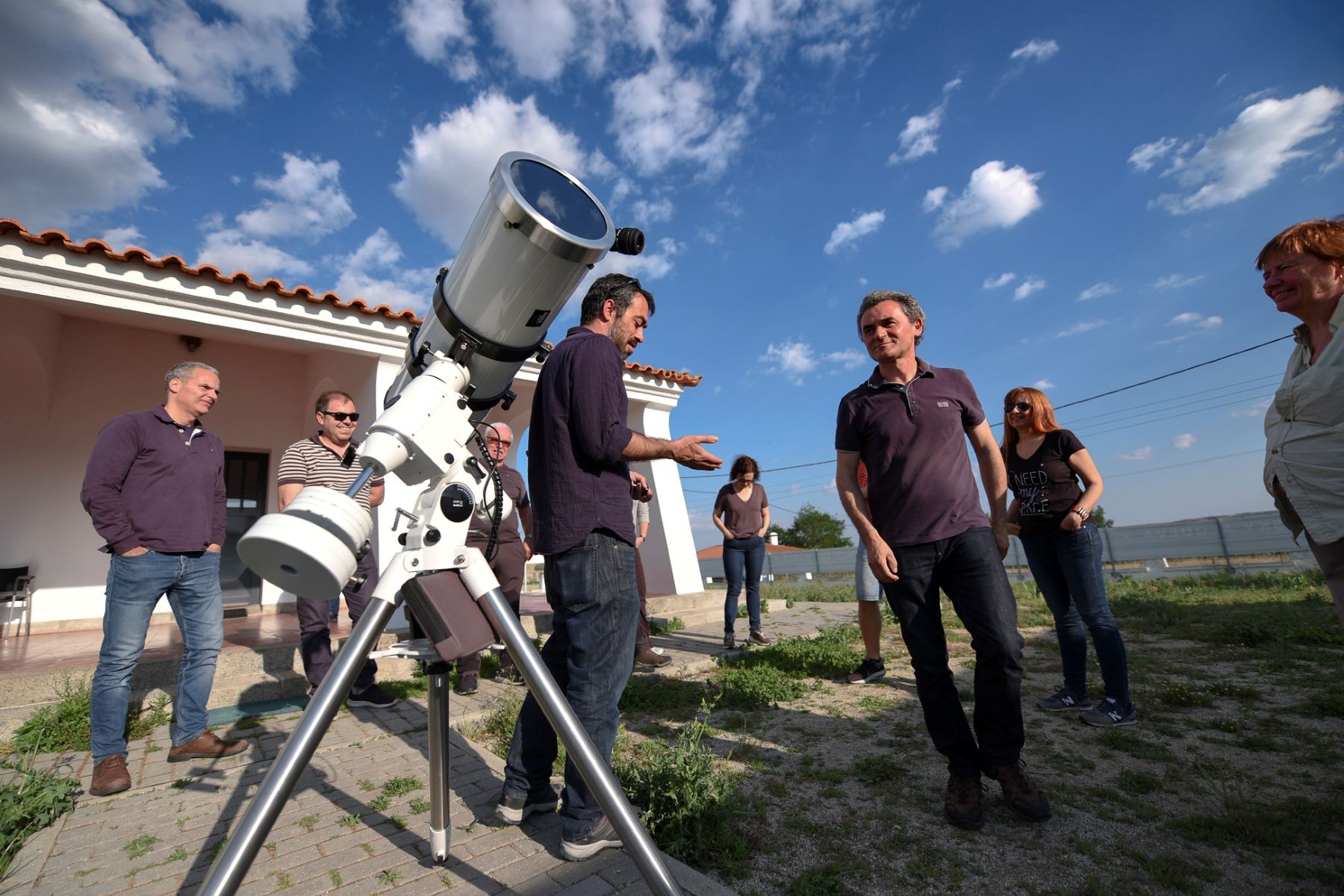
This is followed by solar observation at the observatory, using telescopes specifically designed for safe solar viewing, ensuring complete protection and comfort for participants.
During the session we observe:
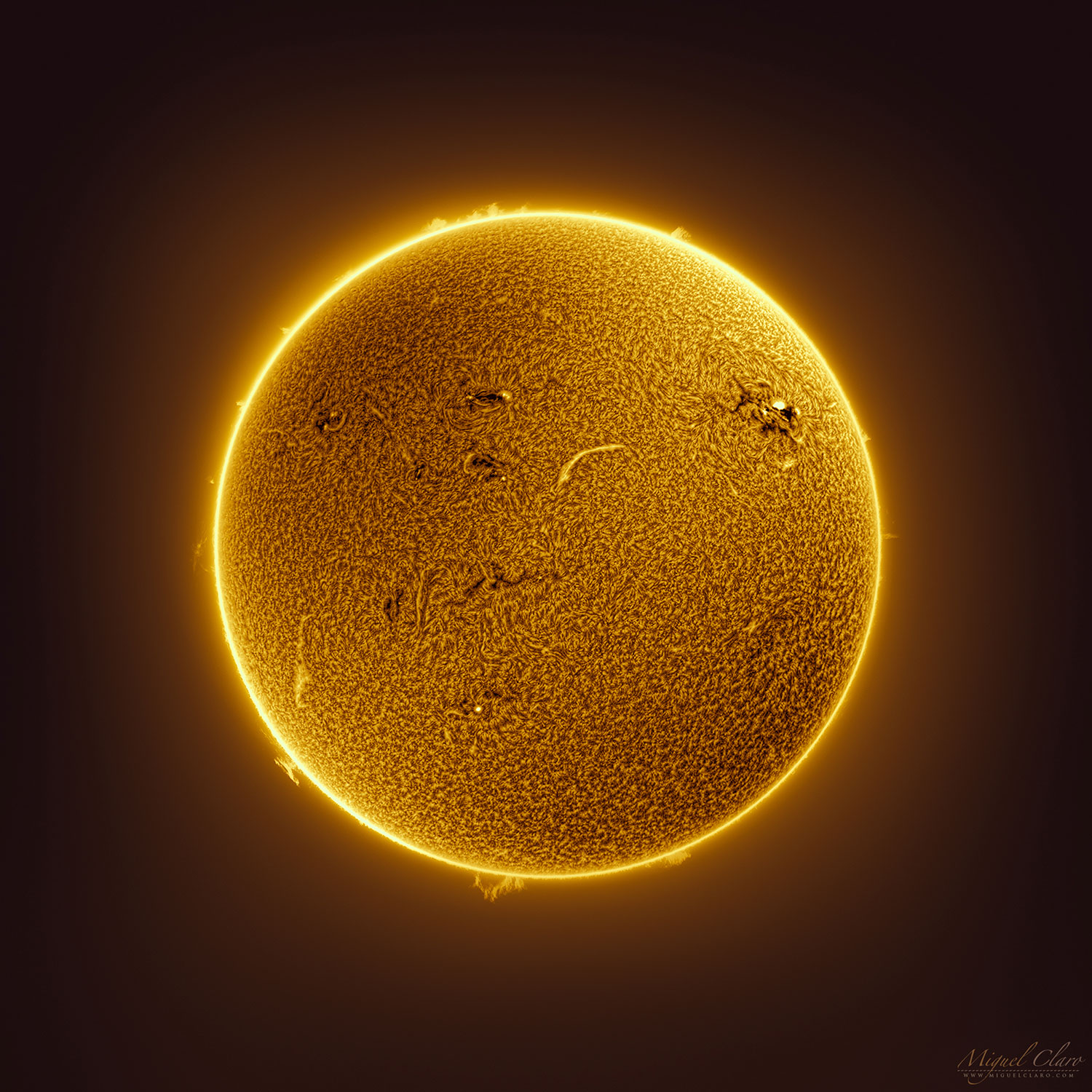
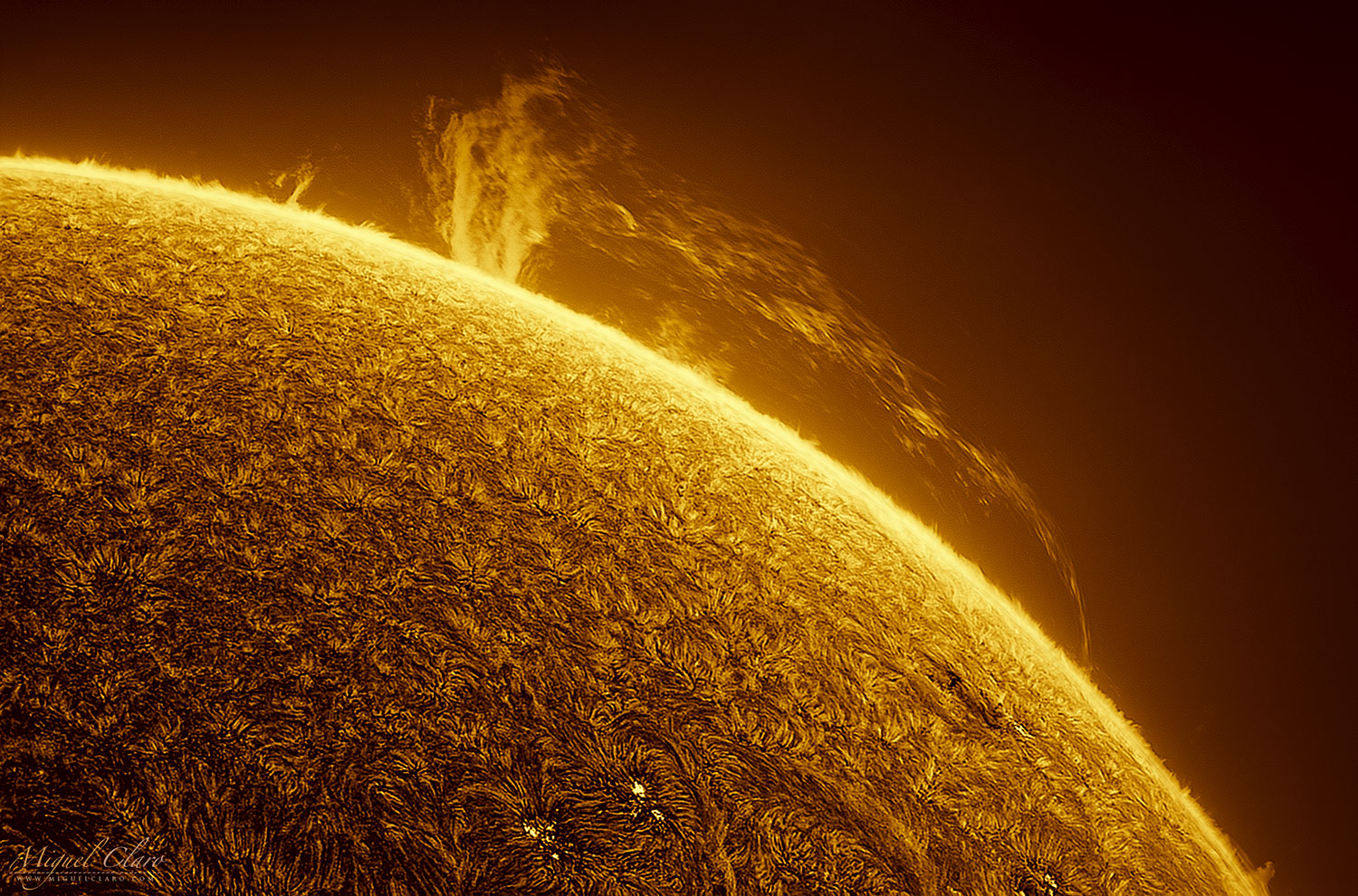
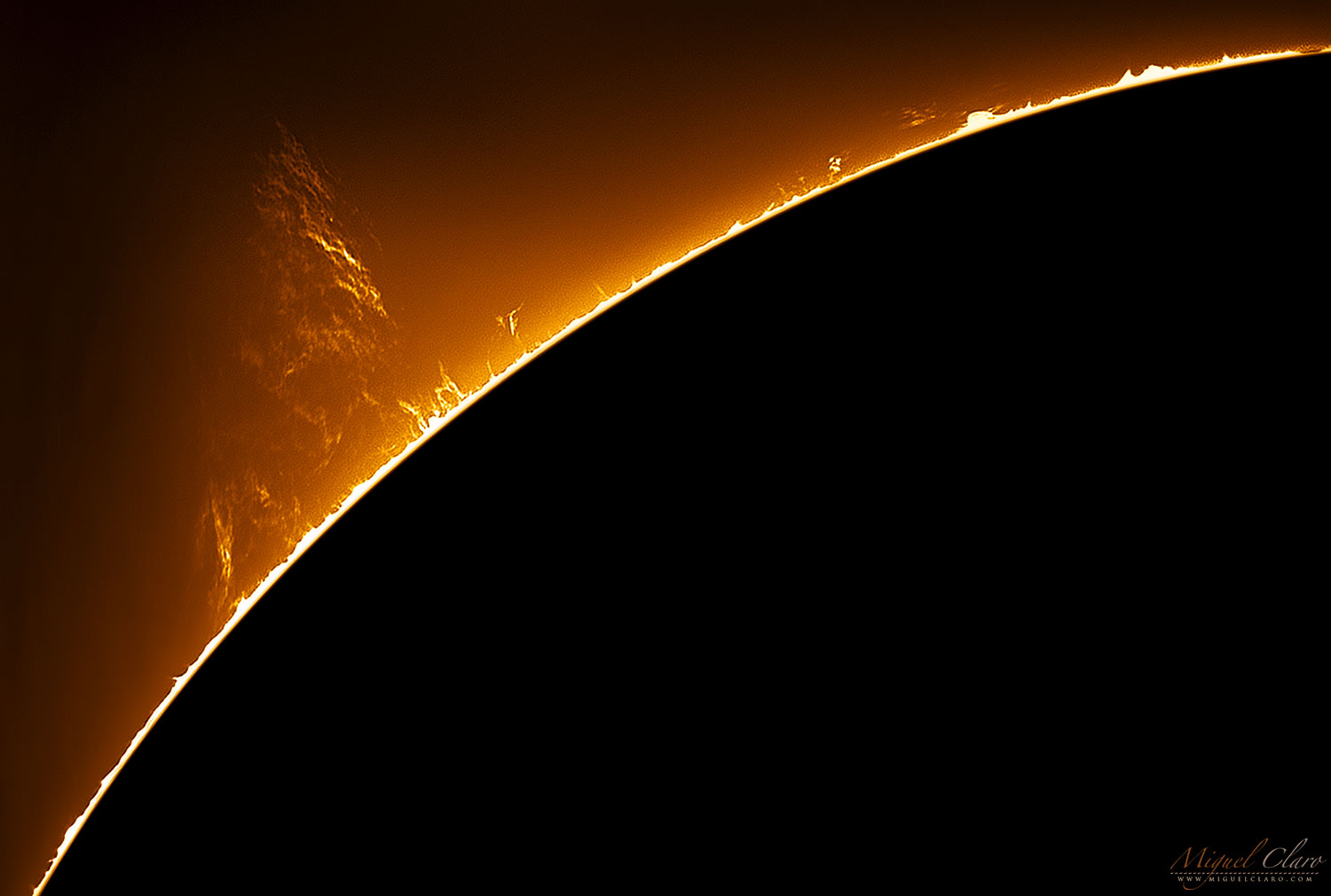
For a more detailed analysis of the chromosphere, we also use a monochrome CMOS camera coupled to the telescope, allowing magnified and enhanced views of fine structures.
Sessions take place from Tuesday to Saturday, by prior booking, and are subject to weather conditions and observatory schedule availability.
This experience combines scientific knowledge, technical safety, and direct observation of our star, providing a deeper understanding of the celestial body that makes life on Earth possible.
SOLAR OBSERVATION PRICING
Solar observation is only safe when performed with equipment specifically designed for that purpose. Looking at the Sun without proper filtration—whether with the naked eye, binoculars, or conventional telescopes, can cause severe and irreversible eye damage.
Safety depends exclusively on the use of certified solar filters capable of drastically reducing visible, infrared (IR), and ultraviolet (UV) radiation.
Beyond the intense brightness of visible light, the Sun emits large amounts of infrared and ultraviolet radiation:
In an unfiltered telescope, solar energy is concentrated by the optical system, significantly increasing the risk of permanent vision damage.
It is important to clarify that ordinary sunglasses, smoked glass, photographic film, X-ray sheets, CDs, photographic filters, or any improvised solutions do not provide safe protection for solar observation. These materials may reduce visible brightness but do not adequately block UV and IR radiation, creating a false sense of safety.
At Dark Sky® Alqueva Observatory we use two distinct systems for solar observation:
All equipment complies with international safety standards and is operated by experienced technicians, ensuring a fully safe experience for participants.
Observing the Sun is scientifically enriching and visually impressive—but only when carried out with appropriate instrumentation and specialized supervision.
There is no single best time of year to observe the Sun. Our star is dynamic and active throughout the year, displaying constantly evolving phenomena.
The Sun has an average rotation period of approximately 27 days (differential rotation, varying with solar latitude). This means that structures such as sunspots and active regions move into and out of view over the course of weeks. Consequently, the solar surface is never static—what we observe today may no longer be visible days later.
In addition to rotation, the Sun undergoes a magnetic activity cycle lasting approximately 11 years, known as the solar cycle. During the solar maximum, sunspots, prominences, solar flares, and magnetic instability are more frequent. During the solar minimum, activity decreases and the surface may appear calmer, though never entirely inactive.
Some of the most significant phenomena associated with solar activity include:
When directed toward Earth, these ejections can interact with Earth’s magnetic field, producing auroras and temporarily affecting communication systems and satellites.
The quality of solar observation depends primarily on local weather conditions, particularly atmospheric stability (daytime seeing) and sky transparency at the time of the session.
In summary, the Sun is a fascinating astronomical object at any time of year. Each session presents a different configuration of its surface and atmosphere, making every observation unique.
What can be observed depends on the level of solar activity on the day of the session. The Sun is a dynamic star whose surface and atmosphere are constantly changing due to intense magnetic activity.
During the observation, different layers of the Sun can be viewed, each revealing distinct phenomena:
Photosphere (visible surface of the Sun)
Observed with a certified neutral solar filter, it may reveal:
Chromosphere (upper layer observable in H-alpha)
Observed with a dedicated H-alpha telescope (656.3 nm), it may reveal:
During periods of heightened solar activity, Coronal Mass Ejections (CMEs) may also be associated with these phenomena.
It is important to note that the Sun’s appearance changes daily due to its rotation (~27 days) and its magnetic cycle (~11 years). Therefore, no two solar sessions are ever the same.
The experience allows participants not only to see these phenomena in real time, but also to understand the physical processes behind them and their influence on the space environment surrounding Earth.
Solar observation depends directly on weather conditions. Clear skies and atmospheric stability are essential to ensure a safe and high-quality experience.
If conditions are not favorable, for example due to persistent cloud cover, precipitation, or atmospheric instability, the session will not take place. Our priority is to ensure that every participant enjoys a scientifically enriching and visually satisfying experience.
For this purpose, when booking we collect your contact details exclusively for operational communication. If necessary, we will contact you to inform you about weather conditions and session feasibility.
Whenever possible, decisions are communicated in advance. However, in cases of variable weather, final confirmation may only be possible close to the scheduled time.
If a session must be canceled, you may reschedule for a new date, subject to availability, ensuring the opportunity to fully enjoy the experience.